Show Your Work! by Austin Kleon – Summary, Notes & Highlights
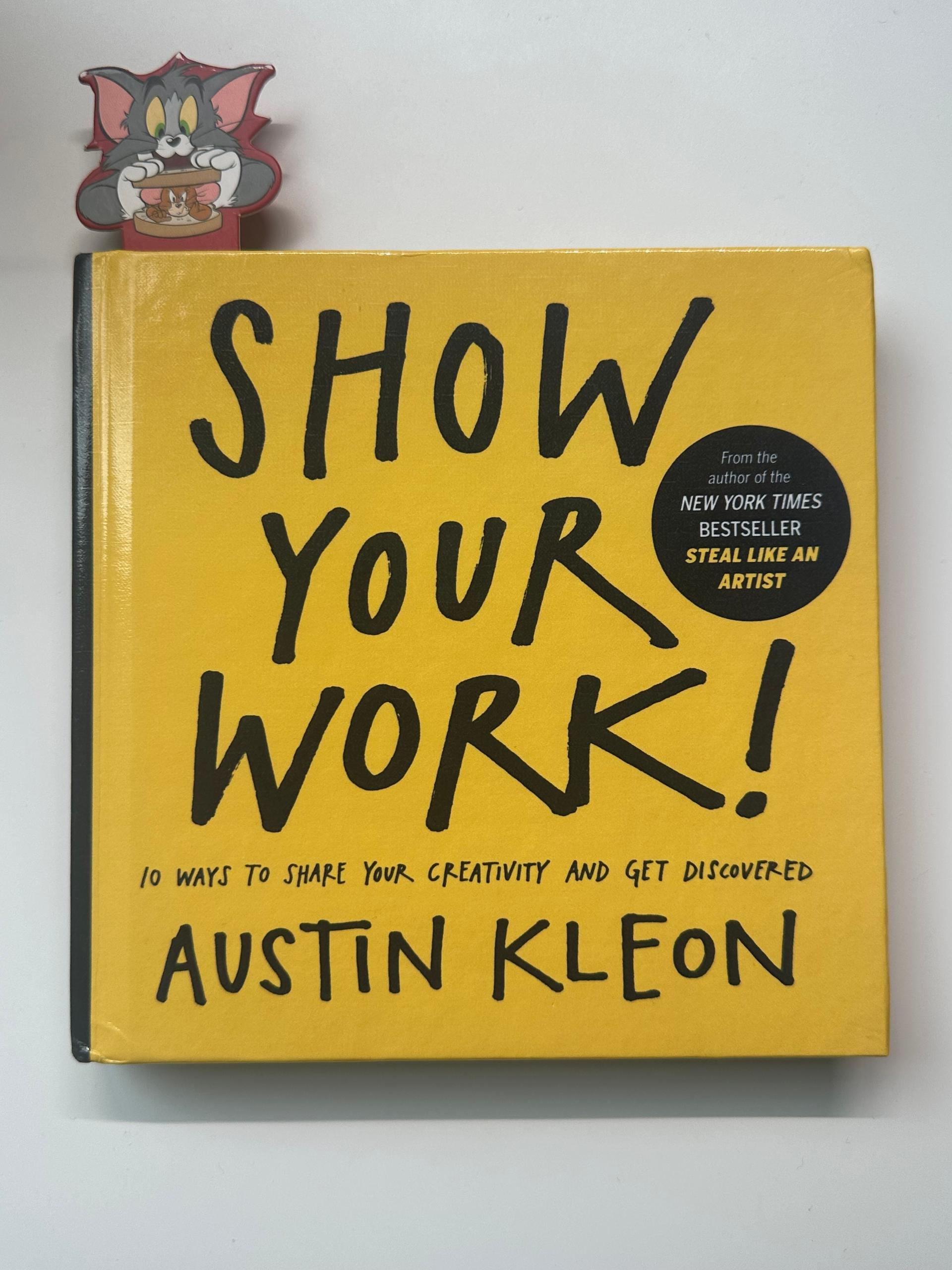
There's something funny about writing a blog post summarising Show Your Work!, because the post itself is the homework. Austin Kleon's little yellow book makes one argument in ten short chapters: don't wait until you're a genius or your work is finished. Share the process, in public, a little at a time, and the audience, the opportunities, and even the discipline will follow.
A note on order: I read this book long before Staff Engineer and The Manager's Path; I'm just writing about it after them. And that order makes its own kind of sense. Those two books helped me decide where I'm going. This one, read much earlier, taught me to build the thing you're looking at right now, and it answers the question career books always leave open: whatever track you choose, how do people find out you're good?
I picked it up when I decided to take content creation seriously, with several goals stacked on one habit: networking, showing my projects and work, building a side income, and honestly, learning how this whole game works by playing it.
🚀 The Book in 3 Sentences
- You don't need to be a genius; you need to be findable, and the way to be findable is to share your process, not just your finished products.
- Sharing something small every day compounds: it builds your body of work, your audience, and your own understanding at the same time.
- Generosity is the strategy: teach what you know, credit your influences, and promote others, because an audience built on giving doesn't feel like self-promotion.
🎨 Impressions
This is not a book you study; it's a book that pokes you. Ten chapters, each one a command: think process not product, share something small every day, teach what you know, don't turn into human spam, learn to take a punch, stick around. Half the pages are illustrations and hand-lettered quotes. It's closer to a manifesto than a manual.
What makes it work is that Kleon aims it at exactly the person who resists it: the one who says "my work isn't ready," "I have nothing to teach," "self-promotion is cringe." Every chapter quietly dismantles one of those excuses.
My old rule was that nothing goes public until it's completely prepared. This book attacks exactly that rule, and it got me. Reading it, I also realised that things I'd already done, cleaning up and linking my LinkedIn and GitHub profiles, launching a project on Product Hunt, starting a newsletter and a YouTube channel, were chapters of this book I'd stumbled into without having a name for them. What was missing was the connecting idea: start smaller than feels comfortable, and share the process while it's still in progress.
👤 Who Should Read It?
- Developers and engineers who think marketing is someone else's job. This book is the gentlest possible introduction to being visible, written by an artist, not a growth hacker.
- Anyone sitting on unpublished work. Half-finished side projects, private notes, drafts. Kleon's whole point is that the process is publishable long before the product is.
- People building a personal brand who hate the phrase "personal brand." The book gives you a version of visibility that runs on generosity instead of self-promotion.
Who should skip it: if you've already internalised "learning in public" and ship content regularly, you know this material, and the book will be a pleasant confirmation rather than a revelation.
☘️ How the Book Changed Me
- It broke my "everything must be ready first" rule. That rule had been quietly blocking me for years. After the book, I started with the smallest possible step: writing posts on LinkedIn.
- It got me in front of a camera. I recorded about fifteen videos and published them on Instagram, not because they were perfect but to collect feedback. Each round, the setup got better and the discomfort got smaller. The fear is gone now; my only remaining problem is finding the time, which is a much better problem to have.
- It turned my scattered experiments into one system. The profiles, the Product Hunt launch, the newsletter, the channel: before the book these were separate attempts. Now they're one connected body of work, and everything points back to a home base I own, this site, exactly as Kleon insists.
✍️ Top 3 Ideas
- Become a documentarian of your own work. The notes, screenshots, and decisions you produce anyway are the raw material of everything you'll ever share.
- Your flow becomes your stock: the small daily shares add up to a searchable, permanent body of work that keeps working for you while you sleep.
- The vampire test: whatever leaves you drained, cut it, and whatever gives you energy, do more of it. This applies to projects, platforms, and people.
📒 Summary + Notes
You don't have to be a genius
Kleon opens by demolishing the lone-genius myth with Brian Eno's word "scenius": great work comes out of scenes, communities of people trading ideas, and you join one by contributing, not by being the smartest. His advice is to embrace being an amateur, because amateurs share freely, learn in the open, and aren't afraid of looking stupid, which is exactly what makes them findable.
Think process, not product
The most practical reframe in the book. You don't need to create extra content; your daily work already produces it. Notes, sketches, failed attempts, decisions, tools, screenshots. Become a documentarian of what you do, and sharing becomes a byproduct of working instead of a second job.
My note: for engineers this is almost unfairly easy. Commit messages, architecture decisions, debugging war stories, before-and-after refactors. We produce documentation-shaped exhaust all day and then claim we have nothing to share.
Share something small every day
Not your masterpiece; one small thing from today's process. Kleon's filter for what to share is a simple "so what?" test, and his warning is to share on your own territory: a domain and site you own, not just platforms you rent. Daily flow, over months, quietly becomes stock: a body of work with your name on it.
Teach what you know, and credit everyone
Two chapters that pair naturally. Teaching what you know doesn't subtract from your value; it compounds it, because the teacher learns twice and the audience remembers who helped them. And when you share other people's work or ideas, credit is non-negotiable: attribution is how a scene keeps functioning.
Don't turn into human spam, and learn to take a punch
The book's guardrails. Human spam is the person who only broadcasts and never listens; the fix is to want hearts, not eyeballs, and to show up for other people's work the way you want them to show up for yours. And once you're visible, criticism arrives. Kleon's advice is boringly correct: you can't take punches if you never relax, so share enough that no single reaction can wreck you, and don't feed trolls.
Sell out, and stick around
The closing chapters give you permission to make money (even the Renaissance was funded) and, more importantly, to persist. Careers aren't single launches; they're chains. Finish a thing, take what's still burning, and light the next project with it. The people who win are mostly the ones who didn't leave.
🪢 Conclusion
Show Your Work! is the shortest book in this series and the one with the highest advice-per-page ratio. It won't teach you your craft; it assumes you have one. What it teaches is the missing layer most engineers never build: the habit of working where people can see you.
My homework from this book is already in progress. First, fill this blog until it works as a real vitrine of my work; the book notes series you're reading is part of that. Then video: a Persian course on TechFarsi first, and text-based courses here after. If you're reading this post, the plan has already started, which is the most Show Your Work way I can think of to end it.